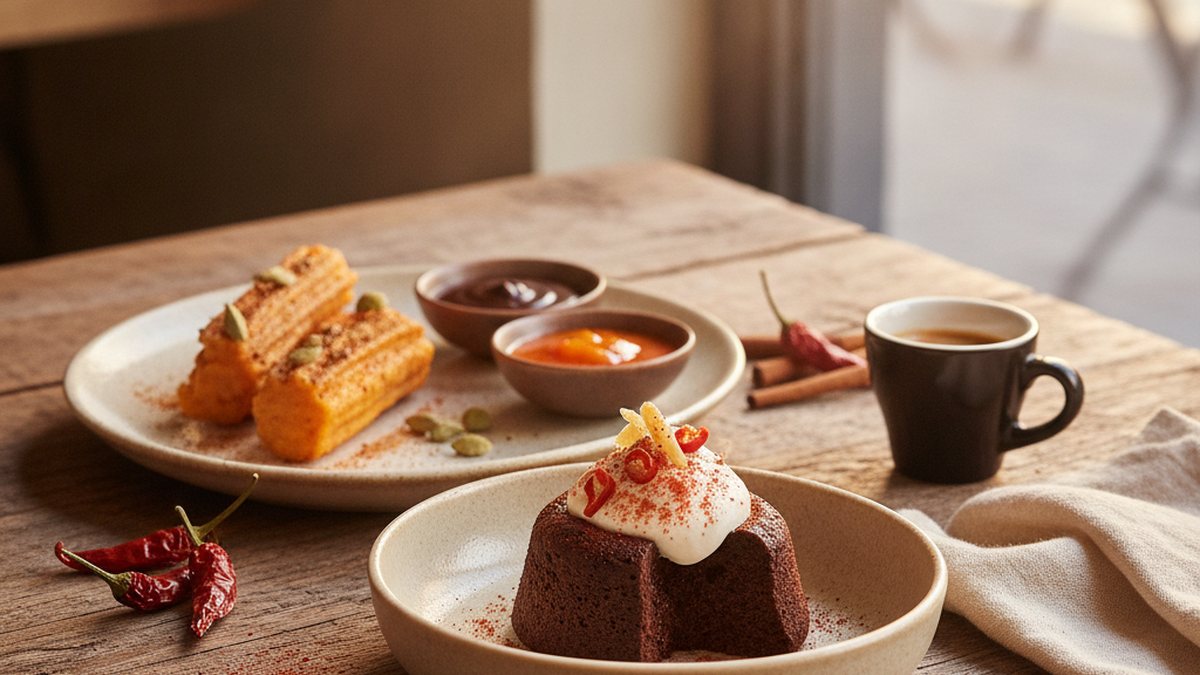
Before a chain adds a local dish, it adjusts the seasoning of the dishes it already sells. It is the cheapest possible form of localisation - No new equipment, no new supply chain - And it is why the same product can taste noticeably different across a border.
Three dials, turned separately
Heat. The most obvious and the most explicitly marketed. Chains frequently offer a spicy variant as a separate product rather than changing the standard one, which lets a single kitchen serve two preferences without a compromise.
Sweetness. Less discussed and more consequential. Sauces, marinades, breads and especially drinks are all calibrated to local sugar expectations, and those expectations vary a great deal.
Salt. Adjusted quietly, and increasingly downward in markets with reformulation programmes. See salt is the quiet problem in chain food.
Spice as a product, not a setting
The commercially clever move is turning heat into a menu item rather than a characteristic. A spicy version sold alongside the standard one does three things at once: it serves customers who want heat, it leaves the core product untouched for those who do not, and it creates a premium tier without a new ingredient of any consequence.
Look across our fried chicken directory - 1,385 items - And spicy variants are one of the most common patterns in the whole dataset. Nando's built an entire brand on making heat the explicit choice rather than an implicit property.
Turning spice into a choice is how one kitchen serves two palates without compromising either.
Sweetness is where travellers get caught
| Where it shows up | What varies | Traveller impact |
|---|---|---|
| Hot drinks | Pre-sweetened by default in several markets | High - The most common surprise |
| Soft drinks | Formulation and sweetener differ by market | Moderate |
| Sauces and marinades | Sweet-savoury balance is calibrated locally | Moderate |
| Bread and buns | Sugar content in the dough varies | Low but noticeable |
| Desserts | Sweetness levels differ substantially | Moderate |
The first row causes the most confusion. If you take coffee or tea unsweetened, say so explicitly rather than assuming - In several markets the default preparation includes sugar or condensed milk, and "a coffee" means something different there.
The same name is not a promise
This is the practical conclusion. A product sold under an identical name in two markets may differ in seasoning, sweetness, salt level, portion and sometimes formulation - Because recipes are set locally within brand standards.
What this means for the price index
Our price index compares products by brand and normalised name, which is the most defensible basis available. It cannot verify that two identically named products are identically formulated, and we say so on the methodology page. Treat a price comparison as a comparison of what a market charges for its version.
Why seasoning is always the first move
Because it is nearly free. A different sauce recipe, a different spice blend, a different sugar level in a syrup - None of these require new equipment, new training or a new supply relationship of any significance. A chain testing a market can adjust seasoning in months and see what happens.
Everything beyond that costs real money, which is why localisation proceeds in stages and why most markets stop somewhere short of a fully rebuilt menu. The stages are set out in how a global chain learns a country.
What to expect as a visitor
- Expect the familiar item to taste slightly unfamiliar. That is the localisation working.
- Expect hot drinks to be sweeter than at home in several markets unless you specify otherwise.
- Expect the spicy option to mean different things in different places - A mild in one market can exceed a hot in another.
- Read the whole board before ordering your usual. The local variants are frequently the more interesting choice, and they are why the menu is worth reading at all.