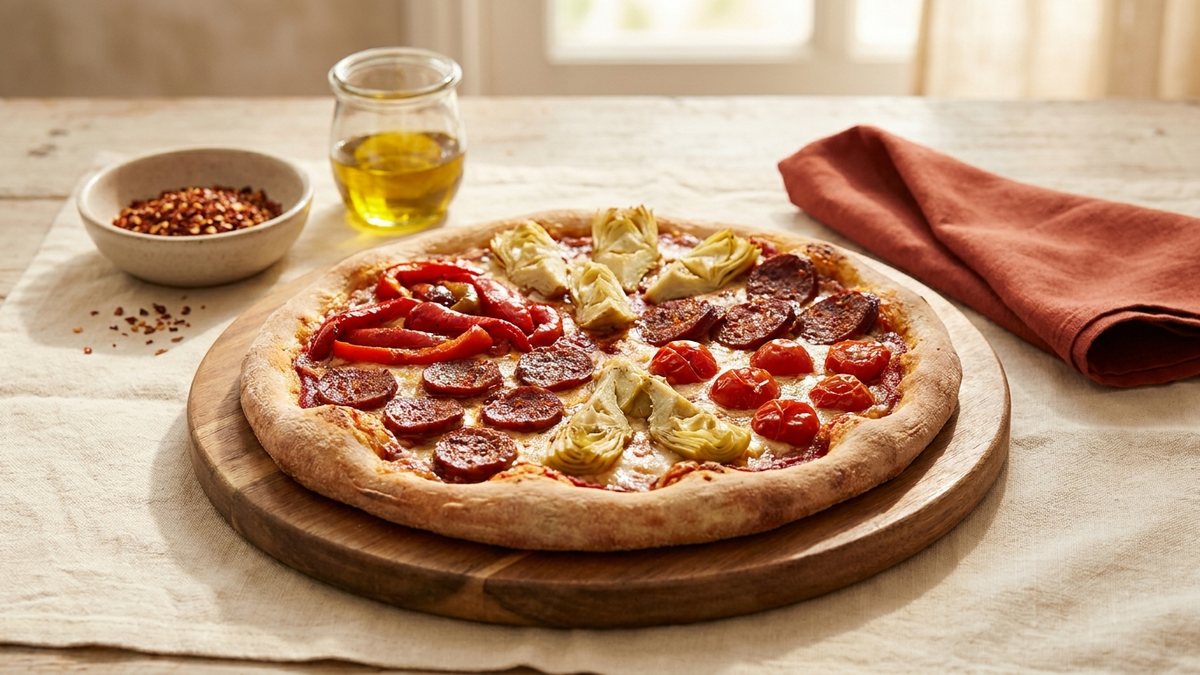
Pizza is the most visibly localised dish in chain food, and the reason is structural. The base is culturally neutral - Dough, sauce, cheese, oven - And the toppings are anything but. Everything a market wants to say about its own taste, it says on top.
Why the base travels and the toppings do not
A pizza oven is a pizza oven. The dough process, the sauce, the assembly and the cook time transfer between countries with almost no adaptation. That makes pizza unusually cheap to launch in a new market compared with, say, a menu requiring a rice operation.
Toppings are the opposite. They are ingredients, and ingredients are local - In availability, in cost and in what people consider appropriate to put on food. So the economics push toward keeping the base identical and letting the toppings do all the localising.
The oven is global. The topping list is a national argument.
1,132 pizzas and limited overlap
Our pizza directory holds 1,132 items across the markets we track. Very few appear under the same name in several markets, and the ones that do are the oldest and simplest combinations.
In our price index, only a handful of pizzas qualify as comparable across four or more markets - Super Supreme, Hawaiian, Domino's Hawaiian and a small number of others. Everything else is local.
Pizza has some of the widest price spreads we hold
| Product | Markets | Cheapest | Priciest | Average |
|---|---|---|---|---|
| Pizza Hut Super Supreme | 5 | $3.10 (Malaysia) | $24.10 (Hong Kong) | $13.18 |
| Pizza Hut Hawaiian | 5 | $9.21 (New Zealand) | $29.48 (Canada) | $15.35 |
| Domino's Hawaiian | 5 | $2.35 (Philippines) | $11.60 (Canada) | $7.70 |
| Pizza Hut Garlic Bread | 7 | $1.43 (Malaysia) | $6.50 (Hong Kong) | $3.65 |
Read pizza comparisons carefully
Pizza is the category where identical names most often describe different products, because size conventions vary enormously. A "regular" in one market can be a different diameter from a "regular" in another, and our index compares the cheapest published option in each market. Treat these spreads as indicative rather than precise - See the methodology page.
What different markets actually want
Some broad patterns hold across our data, though every market has exceptions.
- North America leans meat-heavy: pepperoni, sausage, bacon, and combination pizzas built around several at once.
- The UK and Ireland carry both the American-style meat pizzas and a strong line in chicken-based combinations.
- South-East Asian markets use seafood, sweetcorn and local sauces far more readily, and sweetness in the sauce is calibrated differently.
- Hong Kong is where the most unusual combinations in our dataset appear, reflecting a market comfortable with hybrid formats.
The Hawaiian is the interesting outlier: pineapple on pizza is contentious everywhere and sold everywhere, which is a decent summary of how food arguments usually resolve commercially.
Local pizza chains do well for exactly this reason
Because toppings are where preference lives, and a local chain starts from local preference rather than adapting toward it. The Pizza Company in Thailand is the clearest case in our directory - A home-market operator built around Thai flavour expectations rather than a global template adjusted toward them.
It is the same dynamic described in the local chains that beat the global ones, and pizza is where it plays out most visibly because the format itself is so easy to replicate.
If you are ordering somewhere new
Read the whole topping list rather than looking for your usual. The combinations a market has invented for itself are almost always more interesting than the imported ones, and they are the reason the local chain is usually busier than the international one.
Every pizza menu we hold is published in full at the pizza directory, filterable by country and brand, with every size option and price.