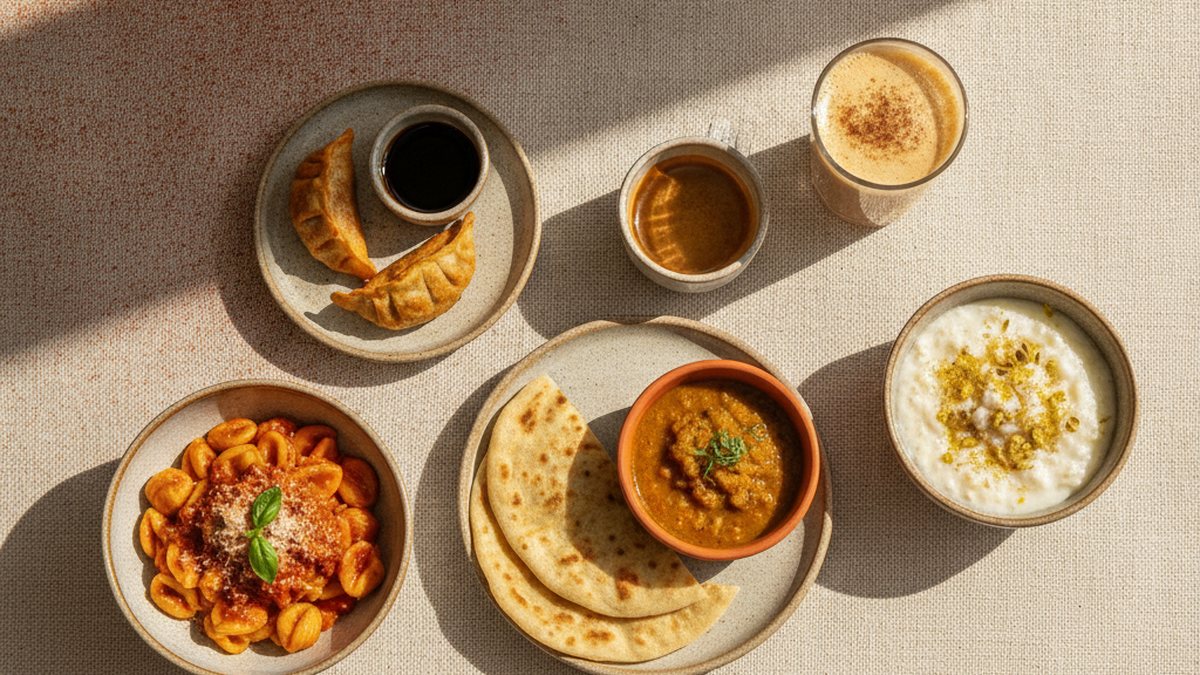
People think of menu localisation as a novelty item - A strange burger that shows up in one country and gets written about. In practice it is a staged, structural process, and the further a market has gone through it, the less the menu looks like the brand's home version at all.
The scale of it, measured
Here is the number that reframes the question. Across 34 brands and eleven markets we hold 15,775 menu items. Only 249 products are sold under the same name by the same brand in four or more of those markets.
Globalisation of fast food is real, but it is globalisation of the format, the brand and the operating model - Not of the food. The food is overwhelmingly local.
The four stages
Localisation happens in a fairly consistent order, because each step costs more than the last.
| Stage | What changes | Cost to the operator |
|---|---|---|
| 1. Seasoning and sauce | Spice level, sweetness, a local sauce option | Low - No new equipment |
| 2. A local side | A familiar accompaniment alongside fries | Low to moderate |
| 3. A local main | A dish built for this market on this equipment | Moderate - New supply chain |
| 4. A rebuilt daypart | Breakfast, or a rice-based service, redesigned entirely | High - New equipment and process |
Stage four is where a menu stops being a translated version of the original. A market that has rebuilt breakfast around rice or noodles is running something structurally different from the brand's home operation, sharing branding and standards but not much else.
Breakfast localises first and hardest
Because it is the most habitual meal. People will try an unfamiliar lunch; they want breakfast to be what breakfast is. A chain that gets breakfast wrong in a new market simply does not sell breakfast there.
Our data holds 464 breakfast items, and the composition changes completely across markets: egg-and-muffin formats in North America, rolls and wraps in Britain and Ireland, rice sets and congee in South-East Asia, noodle sets in Hong Kong. See breakfast around the world.
Rice is the structural marker
If you want one signal for how deeply a menu has localised, look for rice. Adding a sauce is cosmetic. Adding rice means a rice cooker, a holding process, different packaging, different assembly and different portion logic - It is a genuine operational commitment.
A sauce is an opinion. A rice cooker is a decision.
Our rice and bowls category holds 239 items and is concentrated almost entirely in Asia-Pacific markets. Open McDonald's in the Philippines and rice is not a curiosity on the board; it is a core part of the offer.
Why chains localise at all
Three reasons, and only one of them is about taste.
- Taste. The obvious one. A menu that does not suit local palates does not sell.
- Supply chain. Local ingredients are cheaper and more reliable than imported ones, and a localised menu is a cheaper menu to run.
- Price point. Hitting a local price point often requires a local cost base, which means local ingredients and therefore local dishes.
That second and third point explain something the index shows clearly: the most localised markets in our data are also among the cheapest. The Philippines, Malaysia and Thailand all sit below the all-market average in the price index, and all three run deeply localised menus.
See it for yourself
The comparison tool lines up one brand's menu in two markets and shows what is shared and what is exclusive to each side. Running McDonald's in the United States against the Philippines, or KFC in the United Kingdom against Malaysia, makes the scale of localisation immediately obvious.
What never changes
A small, stable core: the brand, the service model, the standards, the packaging language and usually one or two signature products that function as proof of authenticity.
Those signature items are why the price index works at all. A Filet-O-Fish in ten markets or a Italian B.M.T. in ten is the thin invariant thread running through otherwise very different menus. Everything else is negotiable, and most of it has been negotiated.