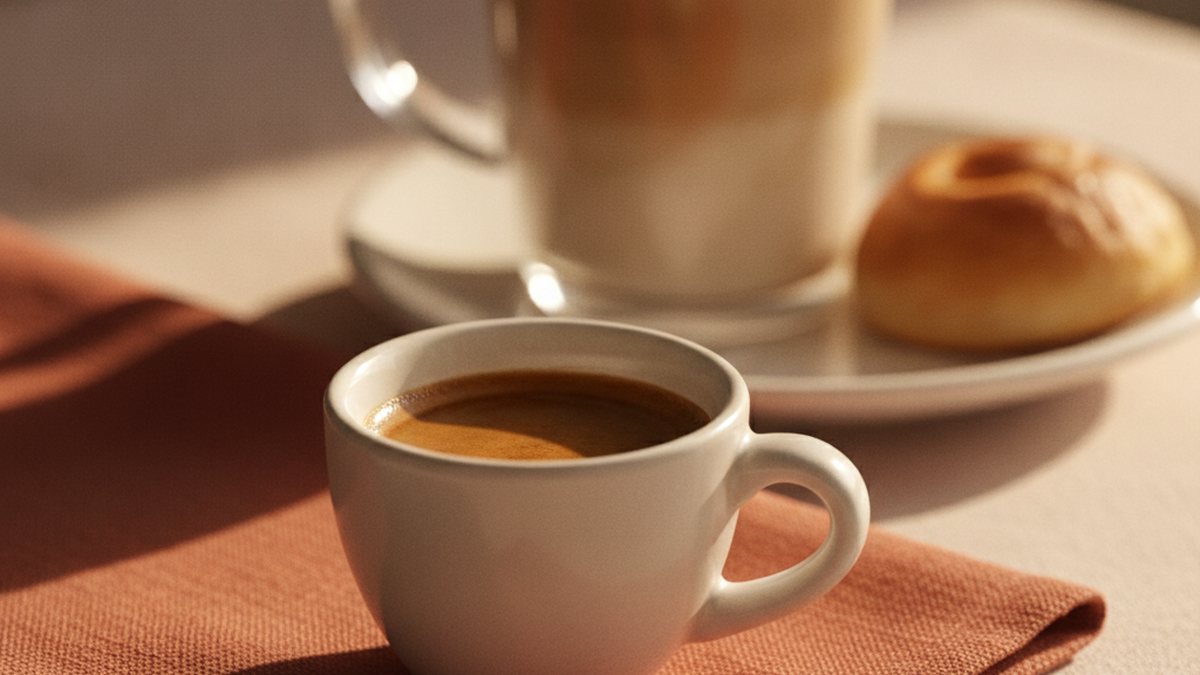
Coffee is the only product in chain food sold by everybody. Burger chains, bakeries, convenience stores, sandwich shops, donut chains and dedicated coffee brands all compete for the same cup, and that competition does something visible to the price.
The entry price is compressed almost everywhere
Look at the cheapest published coffee in each of our markets and the band is remarkably narrow compared with any food category - Roughly $0.79 to $2.36 once converted, against burger spreads that routinely run five-fold.
| Market | Cheapest published coffee |
|---|---|
| United States | $0.99 |
| Canada | C$1.39 |
| United Kingdom | £1.49 |
| Singapore | S$1.00 |
| Australia | A$2.00 |
| Ireland | €2.00 |
| Malaysia | RM3.68 |
| Thailand | ฿55 |
An entry coffee is a traffic driver. It exists to get someone through the door in the morning, and every operator in the category knows the others are pricing it the same way. Nobody makes money on the cheapest cup on the board.
Where the margin actually is
One step up. The flavoured, iced, blended and speciality drinks built on the same espresso base carry the margin, and the gap between the entry price and those drinks is much larger than the gap between markets.
Our Caramel Macchiato row shows it: about $2.67 to $6.95 across nine markets, averaging $4.97 - Several times the entry coffee price in most of them. Add syrup, ice, a plant milk and a size upgrade and the same base ingredient supports an entirely different price.
The espresso is the loss leader. The syrup is the business.
Local coffee culture reshapes the menu
More than in almost any other category. Coffee arrives in each market with an existing local tradition already in place, and chains have to work with it rather than around it.
| Market | What local culture expects |
|---|---|
| Australia, New Zealand | Espresso-based drinks by default; flat whites and long blacks as standard vocabulary |
| United States, Canada | Filter coffee as the everyday cup, espresso drinks as an upgrade |
| United Kingdom, Ireland | Tea still central; espresso drinks now dominant in chains |
| Singapore, Malaysia | Local kopi traditions alongside Western espresso menus |
| Thailand | Sweet iced coffee as a default expectation |
| Hong Kong | Milk tea culture running parallel to coffee |
The Australian and New Zealand case is the strongest example of a local culture setting the terms. A chain entering those markets with an American filter-coffee menu would be competing against an entrenched espresso expectation and would lose.
Iced coffee is the fastest-growing local variable
Across our coffee directory of 871 items, iced variants are one of the most common patterns - And their prominence varies enormously by market. In hot-climate markets, iced is not a summer variant; it is the default.
That has a menu consequence: iced drinks need different equipment, different cups and different holding, and a market where iced is dominant is running a materially different beverage operation from one where hot is.
The sweetness warning, again
In several markets coffee is sweetened by default - Sugar, condensed milk, or a preparation that assumes both. If you take it unsweetened, say so explicitly. It is the single most common ordering surprise for travellers. See ordering at a chain in a country you do not know.
Why this matters most at breakfast
Because breakfast is where coffee decides where people go. Nobody changes their morning routine over a breakfast sandwich; plenty of people change it over a coffee they prefer. That is why coffee pricing is at its most aggressive in the morning daypart and why every burger chain in our directory sells it.
The full picture of that daypart is in breakfast is where chains give up and go local.