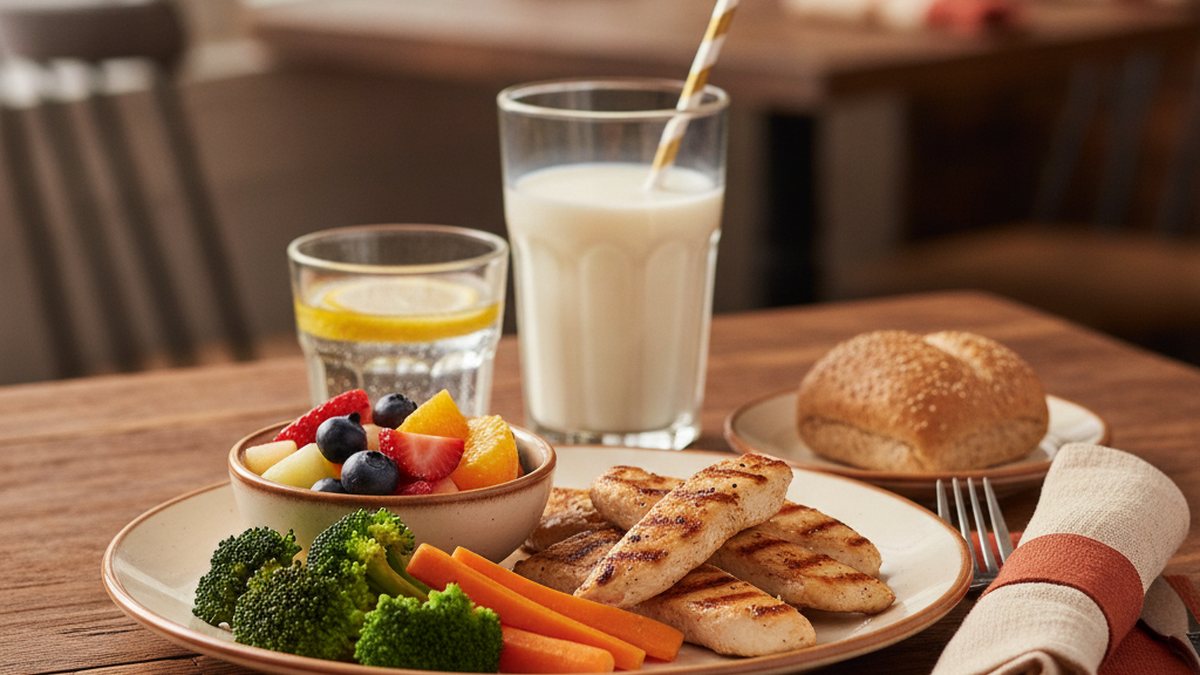
The most effective public-health intervention in fast food in the last twenty years was not a campaign, a tax or a warning label. It was changing which side and which drink come in a children's meal unless you say otherwise.
Defaults do the work
Most people take the default. That is true in every consumer context and it is especially true at a counter with a queue behind you and a child who has already decided what they want.
So when several markets moved kids' meals from a fizzy drink and fries as standard to water, milk or juice and a fruit or vegetable side as standard - With the old options still available on request - The aggregate change was substantial. Nothing was banned. The path of least resistance simply moved.
Adding a healthy option changes a menu. Changing the default changes the orders.
What is available, advertised or not
| Component | Usual default now | Usually available on request |
|---|---|---|
| Drink | Water, milk or juice in many markets | Fizzy drink |
| Side | Fruit, vegetable sticks or yoghurt in many markets | Fries |
| Main | Small burger, nuggets or a local equivalent | Grilled alternative where one exists |
| Extra | Toy, book or activity | Opt out entirely |
The right-hand column runs in both directions and that is the practical point: if the default in a given market is still fries and a fizzy drink, the alternatives usually exist and simply are not on the board. Asking takes three seconds.
Allergens are the question worth asking
For children, allergen information matters more than any other nutrition data and it is the best documented - 2,165 items in our database carry it, against 29 with calorie counts. Staff at chains are generally trained on allergens specifically, and most outlets keep a folder or an on-screen reference.
The limitation is the same as for adults: a declared list covers ingredients, not cross-contact from shared fryers and surfaces. For a child with a diagnosed allergy that distinction is the whole conversation, and it is covered in allergen information on menus.
Four things worth asking at the counter
- "What drink options come with the kids' meal?" - The list is often longer than the board.
- "Can we swap the side?" - Usually yes, at no charge.
- "Do you have the allergen information?" - A routine request, well handled.
- "Is the fryer shared?" - The one question a printed menu will never answer.
Portion sizes are unusually consistent
One quiet advantage of children's meals: they are among the least locally varied parts of a chain menu. Adult portion sizes differ substantially between markets - A large in one country can be a medium in another - But children's portions are held far closer to a common standard.
That makes a kids' meal a reasonably predictable quantity when travelling, which is more than can be said for most of the board. See what menu sizes actually mean for how much adult sizes move.
The two-meals trick
For two smaller appetites, two children's meals frequently beat one adult meal split between them: closer to the right portion, a fixed price, no upsell path, and each child gets to choose. It is rarely suggested and it works often.
Where it fails is with older children who will still be hungry, at which point the value-range items on the main board are usually the better answer - See how value menus work.
The honest part
None of this makes a chain meal an ideal thing to feed a child regularly, and it would be dishonest to pretend otherwise. What it does is make an occasional one better than it would otherwise be, which is a real and achievable outcome rather than an aspirational one.
For what is on children's menus in a specific market, the kids' meals directory can be filtered by country and brand, though note that most chains list the meal as a single bundled line rather than itemising its components.