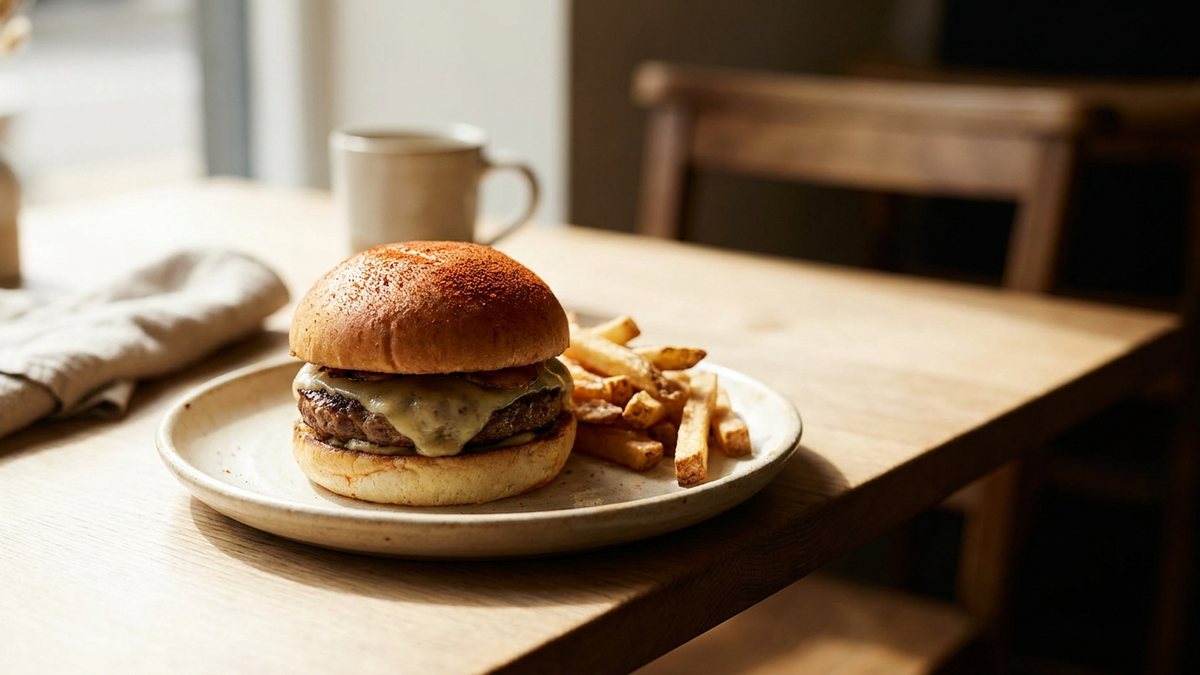
A Five Guys cheeseburger costs about $3.24 in the Philippines and about $16.47 in Ireland. Same brand, same product name, same broad specification, five times the price. Nothing about that gap is arbitrary - But no single explanation covers it either.
Six forces, arriving as one number
Every price on a menu board is the output of six inputs, and they pull in different directions in different markets.
| Force | What it does | Where you see it in our data |
|---|---|---|
| Property cost | Sets a per-site floor that has nothing to do with the food | Hong Kong and Singapore prices on prime sites |
| Labour cost | Fast food is labour-intensive; wage floors pass straight through | Australia and Ireland sitting above average |
| Tax treatment | Moves the printed number by up to a fifth without changing anything real | UK/Irish VAT-inclusive vs US tax-exclusive boards |
| Supply chain | Imported beef and dairy cost more than local rice and chicken | Beef-led menus pricing above localised ones |
| Brand positioning | Decides whether the brand is everyday or aspirational | Five Guys and Shake Shack outside North America |
| Franchise structure | Determines who sets the price at all | Master-franchise markets diverging from home pricing |
Positioning explains more than costs do
The instinct is to explain price gaps with costs. In our data, positioning explains more. Compare two products that span nearly the same set of markets: McDonald's Filet-O-Fish ranges from about $1.78 to $5.71, a spread of roughly three times. Five Guys' plain hamburger ranges from about $2.74 to $15.07 - More than five times, across largely the same countries.
Rent and wages in Ireland are not five times those in the Philippines. What differs is what the brand is for. McDonald's runs a high-volume, price-sensitive model almost everywhere it operates. Five Guys, outside North America, runs a small estate of high-visibility sites selling a premium experience. Two different businesses wearing similar formats.
Cost sets the floor. Positioning sets the price.
The tax illusion
Before reading anything into a transatlantic comparison, check what is inside the number. British, Irish, Australian and New Zealand boards include VAT or GST. American boards do not - Sales tax is added at the till and varies by state and city. A US price is therefore systematically flattered next to a UK one.
A comparison you can trust
Compare within a tax convention, not across one. The United Kingdom against Ireland, or Australia against New Zealand, are apples to apples. The comparison tool will run either pair on any brand that trades in both.
What is actually in the box
Menu composition drives cost more than most price debates allow for. A beef-and-cheese menu in a country that imports both is carrying a freight and tariff bill in every item. A menu rebuilt around local chicken, rice and vegetables is not.
This is one reason localised menus tend to price lower. Across our data the rice and bowls category is concentrated almost entirely in Asia-Pacific markets, and those markets are also the cheapest in the index. Cause and effect run both ways - Chains localise partly to hit a local price point - But the association is consistent.
Who actually sets the price
Head office usually does not. Most international operations run through master franchisees or joint ventures that hold the rights to a whole country and set pricing for it. Their incentives are local: hit a volume target in their own market, against their own competitors, at their own cost base.
That is why a brand's global "value" positioning can invert at a border. It is also why prices inside one country vary between outlets - Franchisees are typically free to price above the national reference figure at airports, stations and tourist sites. We cover the mechanics in how fast-food franchising works.
How to read a gap yourself
When you find a surprising difference in the index, four checks usually resolve it.
- Check the tax convention on both sides. It can account for a fifth of the gap on its own.
- Open both menus and look at the size options. Same name does not mean same gram weight.
- Check the brand's estate in each market. A brand with five sites in a country prices differently from one with five hundred.
- Check what else is on the board. If the cheap market's menu is built on local ingredients, its cost base is genuinely different.
What none of this tells you is affordability. For that you need local wages, and a $4 meal in Manila is not "cheap" the way a $4 meal in Canada is cheap. The dollar figures on this site are a traveller's unit, not a resident's.