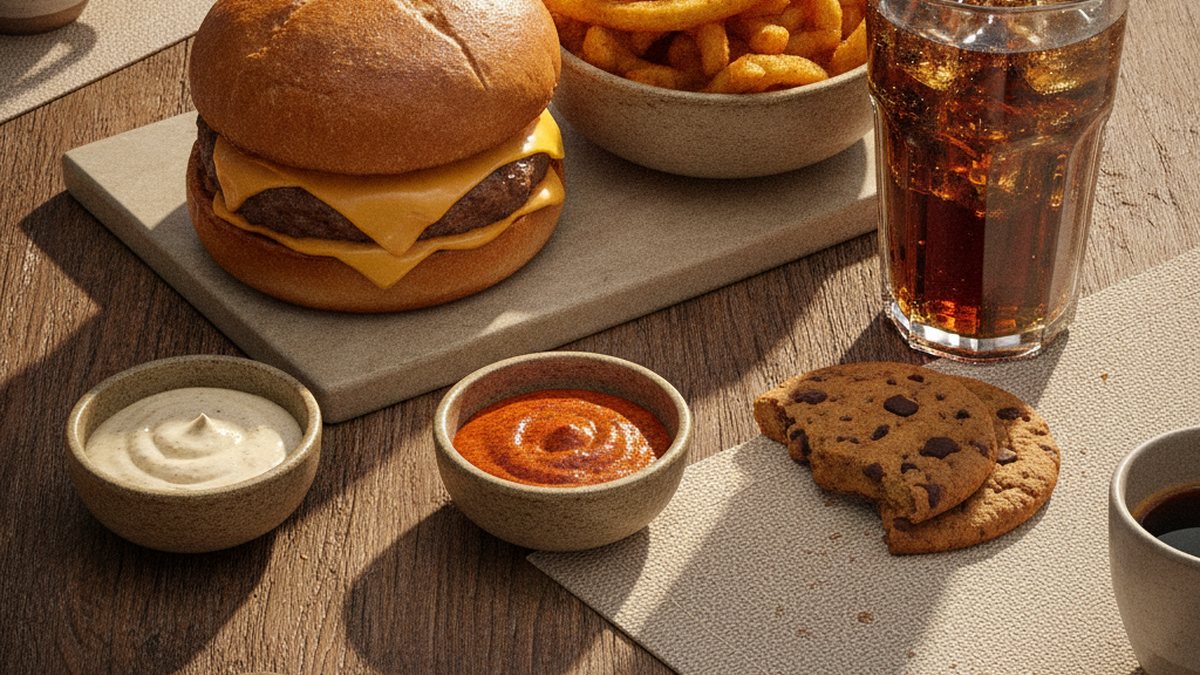
The combo is the most carefully engineered object on a menu board. Across the 255 menus in our database, combos and meal deals are the largest single category at 1,459 items - Ahead of burgers, ahead of fried chicken. That is not an accident of classification. It is where the money is.
What a combo is really doing
A meal deal does three things for the restaurant at once. It raises the average transaction value, it moves high-margin items (drinks and fried sides) that many customers would otherwise skip, and it removes a decision - Which speeds up the queue. Any saving passed to you is the cost of achieving those three things, and it is calculated to be the smallest amount that still works.
None of that makes combos a con. Plenty are genuinely good value. But the arithmetic is deliberately awkward to do while standing at a counter, and that awkwardness is part of the design.
The four checks
1. Price the parts
The only test that matters. Add the à la carte prices of everything in the combo and compare. On most of the menus we hold, both figures are printed on the same board, just not next to each other. Our menu search will pull up the individual item prices if the board is unclear.
2. Ask whether you wanted the drink
Drinks are the highest-margin line on any menu and the most reliable way a combo recovers its discount. If you were not going to buy one, a combo that bundles one is not saving you money; it is selling you a drink at a discount you did not ask for. The same logic applies to the fries.
3. Compare the saving to the cheapest component
If a combo saves less than the price of its cheapest component, it is a portion upsell wearing a discount label. You are paying more in total for more food - Which is fine if you want more food, and not a saving if you do not.
4. Check the size the price refers to
Combo prices are usually quoted for the smallest configuration. The board says one number; the till offers medium and large. Upsizing almost always improves the price per gram and worsens the price per meal, which is exactly why it is offered.
The ten-second version
Would you have bought the drink? If no, ignore the combo. If yes, does the combo save more than the drink costs on its own? If no, buy the parts.
Where combos are genuinely strong
Combo culture is not evenly distributed. In our data it is heaviest in South-East Asian markets, where value sets, bundles and family boxes dominate the board. In Malaysia and the Philippines the cheapest realistic way to eat at most chains is a set, not an à la carte item - The à la carte prices exist mainly as a reference point that makes the set look better.
| Deal type | Usually worth it when | Usually not when |
|---|---|---|
| Standard combo (item + side + drink) | You wanted all three anyway | You only wanted the main item |
| Family or sharing box | Feeding three or more, and the mix suits everyone | Two people, because the per-head saving evaporates |
| Value or saver menu | You want the cheapest hot food available | You end up buying two to feel full |
| Upsize offer | You genuinely want the larger portion | You are chasing the better per-gram price |
| App-only bundle | You would have ordered anyway | It nudged you into an order you had not planned |
The same deal is not the same price everywhere
A combo that is good value at the counter can be poor value on a delivery app, because apps frequently carry a marked-up version of the menu before any fees are added. The comparison you did in the restaurant does not transfer. We take that apart in the delivery mark-up guide.
Kiosks are a different problem again. A self-service screen can present upsells that a counter member of staff would not push, and it does so after you have already committed to the order. That is covered in kiosks and upselling.
The honest conclusion
Most combos save a little money on food you were mostly going to buy. That is a fair deal and there is no need to be cynical about it. The ones to watch are the bundles built around a large drink and a large side, where the headline saving is real but the extra spend is larger - And the family boxes bought by two people, where the per-head arithmetic quietly reverses.
If you want to see the parts and the bundle side by side for a specific restaurant, open its menu page - For example McDonald's in the United States or KFC in Malaysia - Where every item and every size option is listed with its own price.