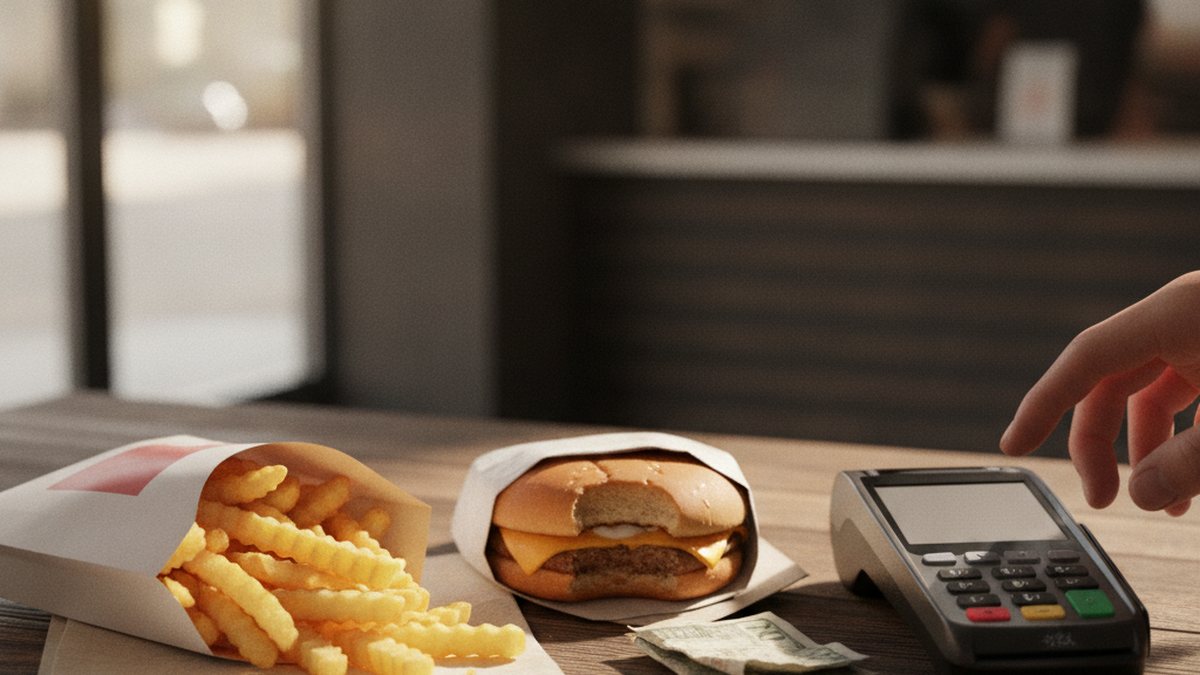
Tipping at a fast-food counter used to be a simple question in most of the world: no. Payment terminals that ask before handing back the card have made it considerably less simple, and the norms genuinely differ between the markets we cover.
Market by market
| Market | Counter service | Table service | Delivery |
|---|---|---|---|
| United States | Discretionary, increasingly prompted | Expected | Expected |
| Canada | Discretionary, often prompted | Expected | Expected |
| United Kingdom | Not expected | Service charge often added | Common |
| Ireland | Not expected | Service charge often added | Common |
| Australia | Not expected | Optional | Common |
| New Zealand | Not expected | Optional | Common |
| Singapore | Not expected | Service charge usually included | Optional |
| Hong Kong | Not expected | Service charge usually included | Optional |
| Malaysia | Not expected | Service charge often included | Optional |
| Thailand | Not expected | Rounding up is common | Common |
| Philippines | Not expected | Service charge often included | Common |
The pattern is clear enough to summarise: counter tipping is a North American practice that other markets have largely not adopted, and delivery tipping is close to universal because the work is individual and visible.
What the payment terminal changed
A screen that asks for a tip before returning your card is a genuinely new social situation. It creates a moment of decision that did not previously exist, in front of a member of staff, with pre-set percentages that are not neutral choices.
The default options on a tipping screen are a suggestion about what is normal, presented as a menu of choices.
Two things worth knowing. The suggested percentages are set by the merchant or the payment provider, not by any convention. And declining is always an option, usually behind a smaller button, and is not rude in markets where counter tipping is not the norm.
Check for a service charge first
In several of the markets above - Singapore, Hong Kong, Malaysia, the Philippines and frequently the UK and Ireland in seated formats - A service charge may already be added to the bill, typically at a stated percentage. Tipping on top of an included service charge is a choice rather than an expectation.
The one useful habit
Read the bill before deciding. If a service charge is listed, the question is already answered. If it is not, the local norm in the table above applies.
Delivery is the clear case
Across almost every market, delivery is where tipping is most established and most warranted. The work is done by an identifiable individual, often on a bicycle or motorcycle, frequently in poor weather, and platform pay structures vary considerably in how much of the fee reaches the rider.
What is worth understanding is that the delivery fee you pay is not the rider's wage. It goes to the platform, which pays the rider under a separate arrangement. That disconnect is the strongest practical argument for tipping in this specific case - And it sits alongside the mark-up mechanics described in the delivery mark-up guide.
If you are travelling
- Do not export your home norm. Over-tipping in a non-tipping market is not generous; it is mildly awkward for everyone, and in some places it will be declined.
- Check for an included service charge before adding anything.
- Rounding up is a safe middle ground in markets where a small gesture is appreciated but a percentage would be odd.
- Cash is often preferred where tipping does happen, because it reaches staff more directly.
None of this is high-stakes. Nobody in a non-tipping market will think less of you for not tipping at a counter, and that is precisely the point - It is not the custom. For the wider set of things that change at a border, see ordering at a chain in a country you do not know.