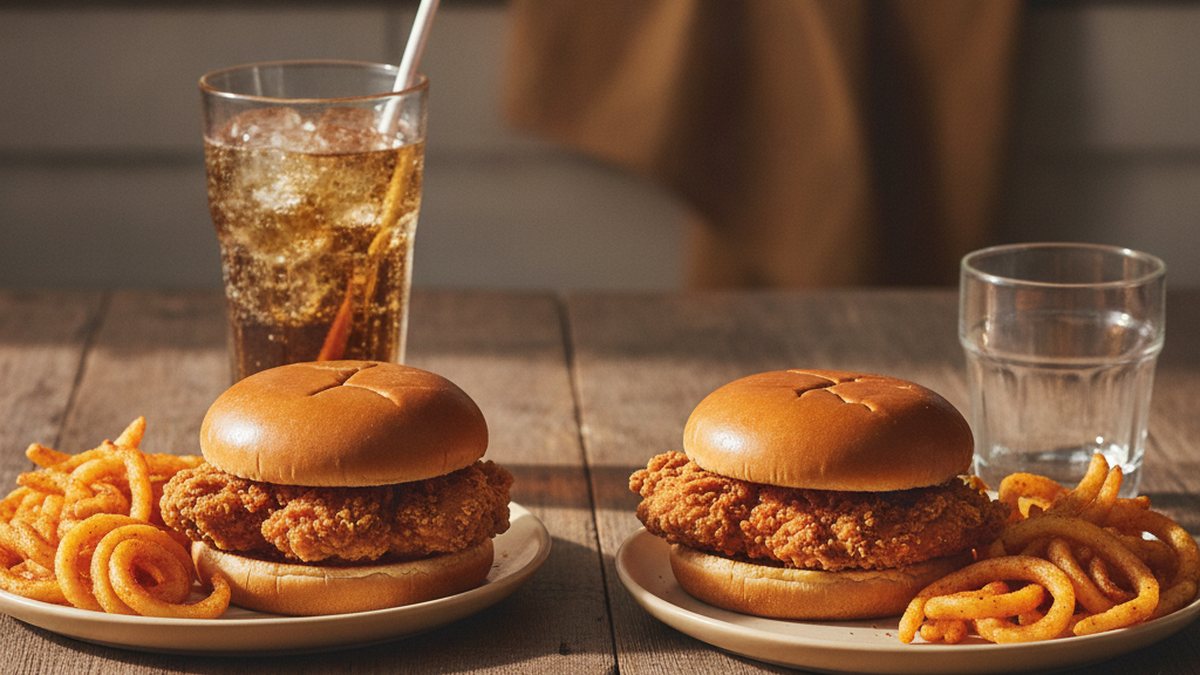
There is one question that settles almost every combo decision, and it is not about the price. It is: were you going to buy a drink anyway? If yes, combos usually win. If no, they almost never do - And no amount of arithmetic at the counter changes that.
The mechanics of a combo discount
A combo bundles a main item, a side and a drink at a price below the sum of the three. The discount is real, but it is funded by the two components with the highest margins - The fountain drink and the fried side. If you would have skipped both, the chain is not discounting your meal; it is selling you two extra items at a reduced rate.
That is why the same combo can be excellent value for one customer and poor value for the person behind them in the queue, at exactly the same price.
A worked example
Take a typical structure and put numbers on it. Assume a main at 5.00, a side at 2.50 and a drink at 2.00 in whatever currency you like, with a combo at 8.50.
| What you want | À la carte | Combo | Better choice |
|---|---|---|---|
| Main + side + drink | 9.50 | 8.50 | Combo, saves 1.00 |
| Main + side only | 7.50 | 8.50 | À la carte, saves 1.00 |
| Main only | 5.00 | 8.50 | À la carte, saves 3.50 |
| Main + drink only | 7.00 | 8.50 | À la carte, saves 1.50 |
The combo wins in exactly one of four cases. That ratio is roughly right in practice too, which is why the honest advice is not "combos are bad" but "combos are good for people who wanted a combo".
The test, in one line
Does the combo save more than the drink costs on its own? If not, and you did not want the drink, buy the parts.
Why combos dominate the board
Across the 255 menus in our database, combos and meal deals form the largest single category at 1,459 items - More than burgers (1,352) or fried chicken (1,385). A chain that can move customers from single items to bundles raises its average transaction without raising a single headline price.
It also speeds up the queue. A combo removes two decisions, and in a business measured in seconds per order that is worth real money independent of the margin.
Where the à la carte price barely exists
In several Asian markets the relationship inverts. Set menus are the default unit of purchase, and the à la carte price is printed mainly so the set has something to be cheaper than. Open McDonald's in Malaysia or Jollibee in the Philippines and the board is organised around bundles from the top down.
The advice changes accordingly. In a set-led market, comparing a set against its parts is usually pointless - The set will win, because it is designed to. The useful comparison is between sets: which one contains the things you actually want at the lowest price.
The two-item alternative
One pattern that consistently beats an upsized combo: two smaller à la carte items instead of one large bundle. Two value-range mains often cost less than one standard combo and deliver more food, at the cost of variety and a drink.
If you are optimising for food per unit of money, the value range beats the combo almost every time.
Whether that is a good trade depends entirely on what you want from the meal. It is worth knowing that it exists, because no menu board will ever suggest it.
The channel changes the answer
All of the above assumes you are ordering at a counter or a kiosk. On a delivery app the arithmetic frequently differs, because app menus are often marked up relative to the in-store board before fees are applied. A combo that saved money in the restaurant may not save the same amount, or any, through an app - See the delivery mark-up guide.
To check the underlying à la carte prices for any restaurant we track, the item search covers all 15,775 items in the database, and every result links back to the menu page it came from.