How Fast-Food Franchising Actually Works
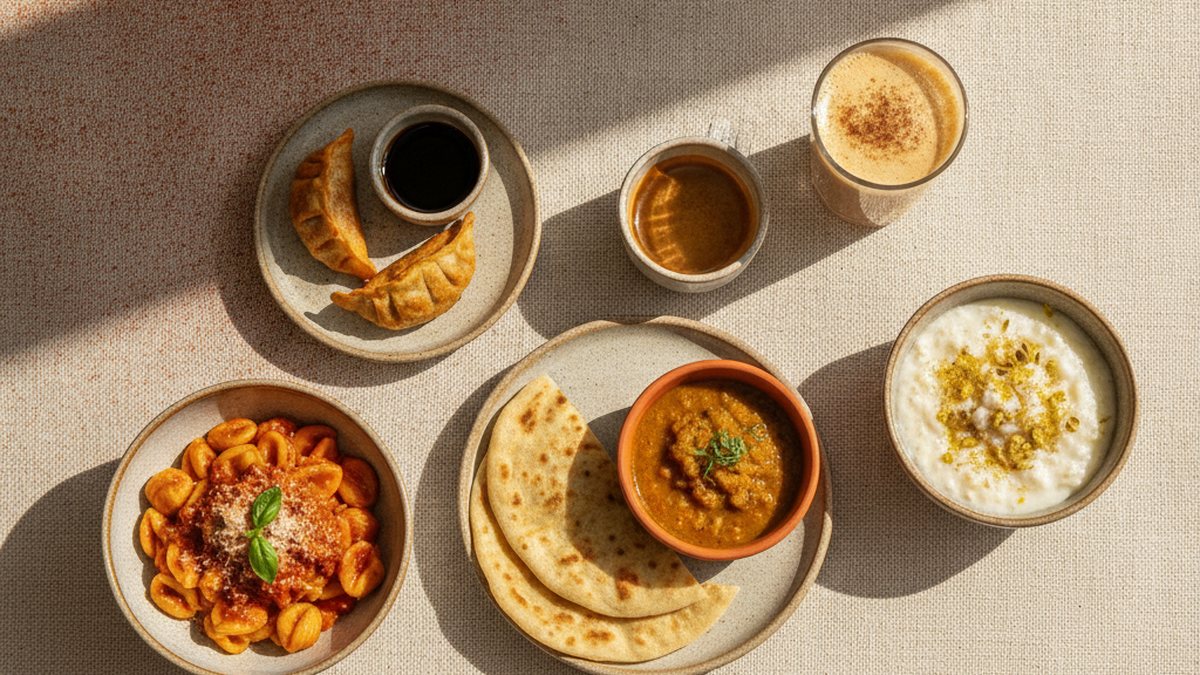
Almost every restaurant you think of as a chain is owned by someone else entirely. What the franchisee actually buys, and why it explains the price on the board.

Menus and prices in 9 markets, 555 items tracked.
CoCo Ichibanya is the basis of a currency index. In August 2026 a strategist at Bank of New York Mellon proposed comparing the price of its pork cutlet curry across countries, the way The Economist has compared Big Macs since 1986, to judge how far the Japanese yen has fallen below what it buys at home. The chain suits the job: it is the largest curry house in the world and its menu barely changes between markets.
See the Katsu Curry Index →CoCo Ichibanya is the newest brand on this site and the one added for the most specific reason: its pork cutlet curry is the measuring stick of the Katsu Curry Index, the currency comparison proposed by a Bank of New York Mellon strategist in August 2026. We hold its menu in nine markets - Thailand, Singapore, the Philippines, Indonesia, Hong Kong, Vietnam, India, the United States and the United Kingdom - With 555 priced items between them, and 19 of its products sell under the same name in enough markets to enter the cross-market price index.
The board is unusually consistent for a chain this international, which is exactly what makes it useful as an economic yardstick: a plate is a topping, a weight of rice and a heat level, wherever you order it. The clearest local deviation in our data is India, where the menu drops pork entirely and builds its katsu line on chicken and tofu instead.
Each market has its own board. Prices are shown in local currency and are not comparable across rows - Use the index below for that.
| Market | Items | Cheapest | Average | |
|---|---|---|---|---|
| Thailand
THB |
66 | ฿50 | ฿198.64 | Full menu → |
| USA
USD |
102 | $1.25 | $10.68 | Full menu → |
| Singapore
SGD |
64 | S$1.10 | S$14.79 | Full menu → |
| Philippines
PHP |
85 | ₱55 | ₱429.93 | Full menu → |
| Hong Kong
HKD |
58 | HK$10 | HK$64.83 | Full menu → |
| United Kingdom
GBP |
54 | £1.90 | £12.06 | Full menu → |
| Vietnam
VND |
30 | ₫16,200 | ₫89,208 | Full menu → |
| India
INR |
25 | ₹45 | ₹443.80 | Full menu → |
| Indonesia
IDR |
71 | Rp 15,900 | Rp 78,379 | Full menu → |
Prices are in each market’s own currency and are not comparable across rows; for that, use the price index.
Products sold under one name in four or more of our markets, converted to US dollars at weekly mid-market rates.
| Product | Markets | Cheapest (USD) | Average (USD) | Priciest (USD) | Gap |
|---|---|---|---|---|---|
| Vegetable Curry | 8 | $4.46 | $8.55 | $13.64 | +206% |
| Chicken Cutlet Curry | 8 | $5.35 | $10.19 | $16.23 | +204% |
| Spinach Curry | 7 | $4.11 | $7.87 | $13.50 | +228% |
| Fried Chicken Curry | 6 | $5.35 | $10.65 | $16.77 | +214% |
| Mushroom Curry | 6 | $4.46 | $8.59 | $13.64 | +206% |
| Pork Cutlet Curry | 6 | $6.73 | $11.40 | $16.77 | +149% |
| Fried Squid Curry | 5 | $4.80 | $10.50 | $17.27 | +260% |
| Seafood Curry | 5 | $5.69 | $12.57 | $20.27 | +256% |
| Fried Shrimp Curry | 5 | $5.01 | $8.85 | $16.23 | +224% |
| Sausage Curry | 5 | $5.35 | $12.12 | $16.23 | +204% |
| Clam Curry | 5 | $5.51 | $10.37 | $16.36 | +197% |
| Cheese Curry | 5 | $5.54 | $9.55 | $13.64 | +146% |
| Tuna Salad | 5 | $2.30 | $3.63 | $5.35 | +133% |
| Beef Curry | 4 | $5.62 | $12.27 | $17.73 | +215% |
| Fried Chicken Omelette Curry | 4 | $6.17 | $10.38 | $18.82 | +205% |
| Eggplant Curry | 4 | $4.46 | $7.48 | $13.50 | +203% |
| French Fries | 4 | $1.83 | $3.23 | $4.28 | +134% |
| Stewed Chicken Curry | 4 | $6.95 | $11.65 | $15.55 | +124% |
| Corn Salad | 4 | $2.45 | $3.66 | $4.99 | +104% |
Every item across every CoCo Ichibanya menu, mapped onto our dish taxonomy.
CoCo Ichibanya is a Japanese curry house chain, known at home as Curry House CoCo Ichibanya and usually shortened to CoCo Ichi. It was founded in Nagoya in 1978 and is now the largest curry restaurant chain in the world by number of outlets.
The menu is built around one dish. A plate of Japanese curry rice is ordered by choosing a topping, a portion of rice by the gram, a heat level and, in some markets, the amount of sauce. Pork cutlet curry, the katsu curry, is the item most people order and the one the chain is measured by.
That single-dish focus is why the chain became an economic yardstick. In August 2026 Geoff Yu, a senior strategist at Bank of New York Mellon, proposed the Katsu Curry Index, comparing the price of the same CoCo Ichibanya katsu curry across countries in the way The Economist has long compared Big Macs. The plate is close to identical wherever it is served, so what changes between markets is local costs rather than the food.
Japan remains the home market and by far the largest. The chain has expanded across East and Southeast Asia and into a small number of Western markets, generally through licensees.

Almost every restaurant you think of as a chain is owned by someone else entirely. What the franchisee actually buys, and why it explains the price on the board.

Localisation is not adding a novelty item. It is a staged process with a predictable sequence, and the menu data shows exactly how far each market has travelled.

Menu boards are designed documents, not lists. Where the money items sit, what the ordering of panels is doing, and how to find the price you actually want.
Price reports are signed, reviewed by a person, and earn points when accepted - So they need an account. Signing in takes one tap and brings you straight back to the report.
Continue with GoogleYour email is never published. How reports work.
Discussion
Prices move and menus differ by branch - What people have seen on the ground is part of the record. Be useful, be civil.
No comments yet - Yours starts it.